
One of the most remarkable achievements in modern medicine is measured not in a single breakthrough but in a falling number: the percentage of wounded who do not survive. Over the past two decades, that number dropped dramatically on the battlefield, and the lessons behind it have reshaped how trauma is treated everywhere. Dr. Martin Schreiber has spent his career inside that effort, as a surgeon, a researcher, and a soldier.
This is a look at how military trauma care improved so sharply, why it matters far beyond the military, and where a surgeon-scientist like Dr. Schreiber fits into that story.
A Survival Revolution
The scale of the improvement is striking. According to a landmark report from the National Academies of Sciences, Engineering, and Medicine, the case fatality rate, meaning the share of wounded service members who die, fell from 23 percent in the Vietnam War to 9.3 percent in the conflicts in Iraq and Afghanistan. Even more telling, the case fatality rate for U.S. service members injured in Afghanistan decreased by nearly 50 percent between 2005 and 2013, even as the severity of injuries increased over that same period.
That kind of gain does not happen by accident. As the report makes clear, it was the result of deliberate design, constant measurement, and a willingness to change practice based on what the data showed. It represents one of the most successful sustained improvements in the history of trauma care.
- Vietnam War case fatality rate: 23 percent
- Iraq and Afghanistan case fatality rate: 9.3 percent
- Nearly 50 percent reduction in Afghanistan case fatality between 2005 and 2013
- Achieved despite rising injury severity over the same period
How the System Changed
The improvement came from treating trauma care as a system rather than a series of isolated heroic acts. The military built an integrated approach that connected every stage of care, from the point of injury on the battlefield through evacuation and on to definitive treatment at a hospital.
Several elements drove the change. Care was standardized around the best available evidence rather than left to individual habit. A formal trauma registry captured data from real cases so that outcomes could be measured and practices refined. Critically injured patients could be moved sooner and cared for continuously during transport rather than waiting to be stabilized before evacuation. And the whole system was built to learn, updating its protocols as new evidence emerged. This is exactly the kind of evidence-driven, systematic approach that defines Dr. Schreiber’s work as a researcher, described further in his profile as a surgeon, soldier, and trauma researcher.
The Role of the Surgeon-Scientist
Advances like these depend on a particular kind of professional: the surgeon who not only treats patients but studies the treatment, asks whether it can be done better, and produces the evidence that changes practice for everyone.
This is the space Dr. Schreiber occupies. As an internationally recognized trauma and critical care surgeon and a Colonel in the U.S. Army Reserve, he has worked at the intersection of clinical care and research throughout his career. His focus on how the body responds to severe injury, particularly the challenges of hemorrhage and the failure of blood to clot properly after trauma, addresses some of the exact problems at the heart of the survival gains described above. Solving those problems is what turns a battlefield lesson into a permanent improvement in care.
Leading Research Forward
That work continues in his current role. As Director of Surgical Research at Madigan Army Medical Center on Joint Base Lewis-McChord, Dr. Schreiber leads the kind of investigation that keeps trauma care improving, a position detailed in the announcement of his appointment as Director of Surgical Research at Madigan Army Medical Center.
The importance of that role is easy to underestimate. The National Academies report warned that the hard-won knowledge developed during recent conflicts could be lost without deliberate effort to preserve and build on it. Sustained research leadership is precisely how that knowledge is protected and advanced rather than allowed to fade between conflicts. The surgeons who commit to research are the ones who ensure that the next generation of trauma patients benefits from what has already been learned.
From the Battlefield to the Emergency Room
The most important part of this story for most people is that these advances do not stay in the military. The lessons learned in combat trauma have steadily transformed civilian trauma care as well.
Techniques and principles proven under the most extreme conditions, from controlling catastrophic bleeding to moving critically injured patients quickly to definitive care, now shape how a car crash victim or a gunshot patient is treated in an American emergency room. The same National Academies effort was explicitly focused on integrating military and civilian trauma systems so that these gains reach everyone, not only those in uniform. A surgeon-scientist working in military trauma research is therefore contributing to care that extends far beyond the battlefield.
A Career Measured in Lives
The story of modern trauma care is one of steady, deliberate, evidence-based improvement, driven by people committed to doing the work and studying it at the same time. The falling fatality rates represent thousands of people who survived injuries that would have been fatal in an earlier era.
Dr. Martin Schreiber’s career reflects that commitment. As a surgeon who treats the injured, a researcher who studies how to treat them better, and a military officer who has served through multiple deployments, he embodies the kind of dedication that has made this survival revolution possible, and that will determine how much further trauma care can advance.
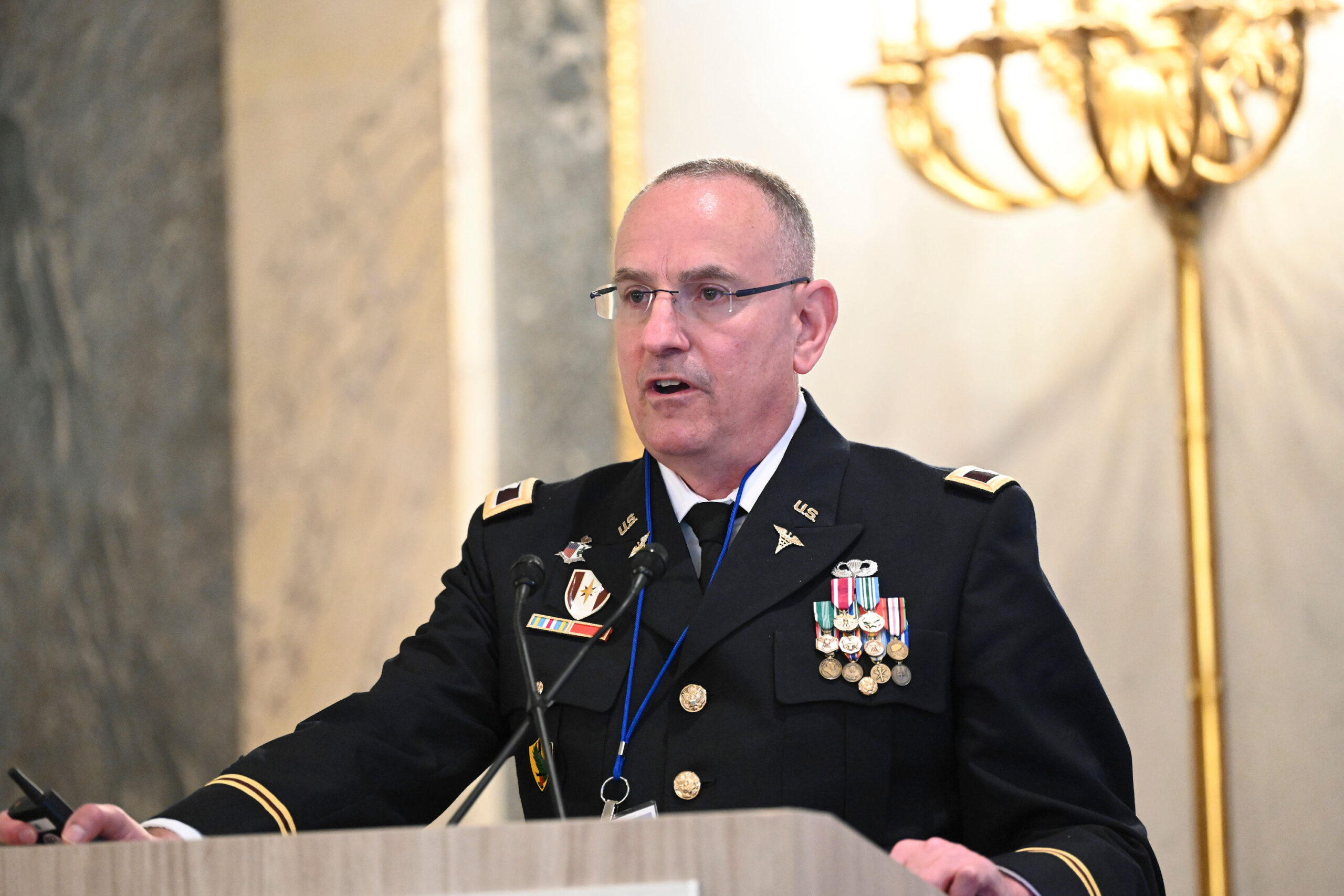
Dr. Martin Schreiber, M.D. is a Colonel in the United States Army Reserve and a trauma surgeon with decades of experience.