
My internship was at Madigan Army Medical Center. That was decades ago, long before deployments to Iraq and Afghanistan, long before the research programs, long before the publications and the laboratory work and the clinical roles that have defined most of my career. When I drive onto Joint Base Lewis-McChord now as a full-time government employee, I am returning somewhere that was, in a very real sense, where I became a surgeon.
That fact is not lost on me. Neither is the responsibility it carries.
I have transitioned to a full-time position at Madigan Army Medical Center as Director of Surgical Research in the Department of Surgery. I hold an Adjunct Professor of Surgery appointment at the Uniformed Services University of the Health Sciences. I remain a Colonel in the United States Army Reserve Medical Corps. The work I am doing at Madigan brings together the threads of my career in a way that feels both necessary and right for this moment in my professional life and in the evolution of military medicine.
What This Role Actually Involves
As Director of Surgical Research, I oversee a research program that operates at the intersection of clinical surgery, laboratory science, and operational military medicine. The questions my team and I are pursuing are ones I have been working toward for my entire career. How do we improve outcomes after traumatic brain injury? How do we manage hemorrhagic shock more effectively, particularly in the prehospital and far-forward environment? How do we develop blood products and resuscitation strategies that hold up when traditional supplies are unavailable or depleted?
These are not theoretical questions. They have direct operational consequences for service members who sustain injuries in environments where the margin between life and death depends on what happens in the first minutes and hours after wounding. My three deployments, to Iraq in 2005 and Afghanistan in 2010 and 2014, made that reality concrete for me in ways that purely academic training cannot. I served as chief of surgery for the military hospital in Tikrit and as joint theater trauma system director in Bagram. I have seen what the research needs to solve. That experience shapes what I choose to study and how I evaluate whether our work is actually moving the needle for the people it is meant to serve.
Why Madigan Is the Right Place for This Work
Madigan serves one of the largest military populations in the country. The patient population, the clinical volume, and the operational context of Joint Base Lewis-McChord create conditions for surgical research that are genuinely different from what is available in a purely civilian academic medical center. The mission here is not just to advance knowledge. It is to advance knowledge that directly serves the readiness and the health of the military force.
That distinction matters. The best military surgical research is not research that happens to be conducted by people in uniform. It is research designed around the specific physiological challenges, logistical constraints, and operational demands of military medicine. The environment at Madigan supports that orientation in ways that are valuable and rare.
My affiliation with the Uniformed Services University of the Health Sciences as an Adjunct Professor of Surgery reinforces that connection. USU links the clinical and research work at military facilities like Madigan to the broader academic infrastructure of military medicine, including the training programs, the educational missions, and the policy conversations that shape how military trauma care evolves over time. Staying engaged with that broader ecosystem is essential for research that does not exist in isolation from the field it serves.
The Research Agenda
My research focus continues to center on traumatic brain injury and hemorrhagic shock, two of the most significant causes of preventable death and disability in trauma patients, military and civilian alike. The laboratory and clinical work I have done over my career, supported by the Department of Defense, the NIH, and industry partners, has produced findings that have influenced resuscitation protocols, blood product development, and prehospital care guidelines. At Madigan, I intend to continue and extend that work with the resources and the operational context that this institution provides.
One of the areas I am particularly focused on is improving outcomes from traumatic brain injury before patients reach a definitive care facility. The interval between injury and hospital arrival is often where the most consequential secondary injuries occur in TBI patients. Interventions that can be delivered by medics, by paramedics, or by forward surgical teams in that window have the potential to change outcomes for a meaningful percentage of severely injured patients. That problem is difficult and the literature does not yet have a satisfying answer. It is the kind of problem this research program is built to address.
What Comes Next
I did not come to Madigan to maintain what already exists. I came to build. The surgical research program here has a strong foundation, and I intend to expand it in ways that reflect the current state of trauma science and the unmet needs of the military medical community. That means building research collaborations, developing the next generation of military surgeon-scientists, and producing work that genuinely advances the field.
The combination of roles I hold, Director of Surgical Research at Madigan, Adjunct Professor at USU, and Colonel in the Army Reserve, is not accidental. Each role reinforces the others. The clinical work informs the research. The research informs the teaching. The teaching develops the people who will carry this work forward after I am no longer in these positions. That continuity is part of what I am most committed to building.
I have been a surgeon and a soldier since 1984. The two identities have always been intertwined for me. Returning full time to the military medical system at this stage of my career is not a departure from what I have been doing. It is, in many ways, the most complete expression of it.
More about my background, publications, and current work is available at martinschreiber.co.
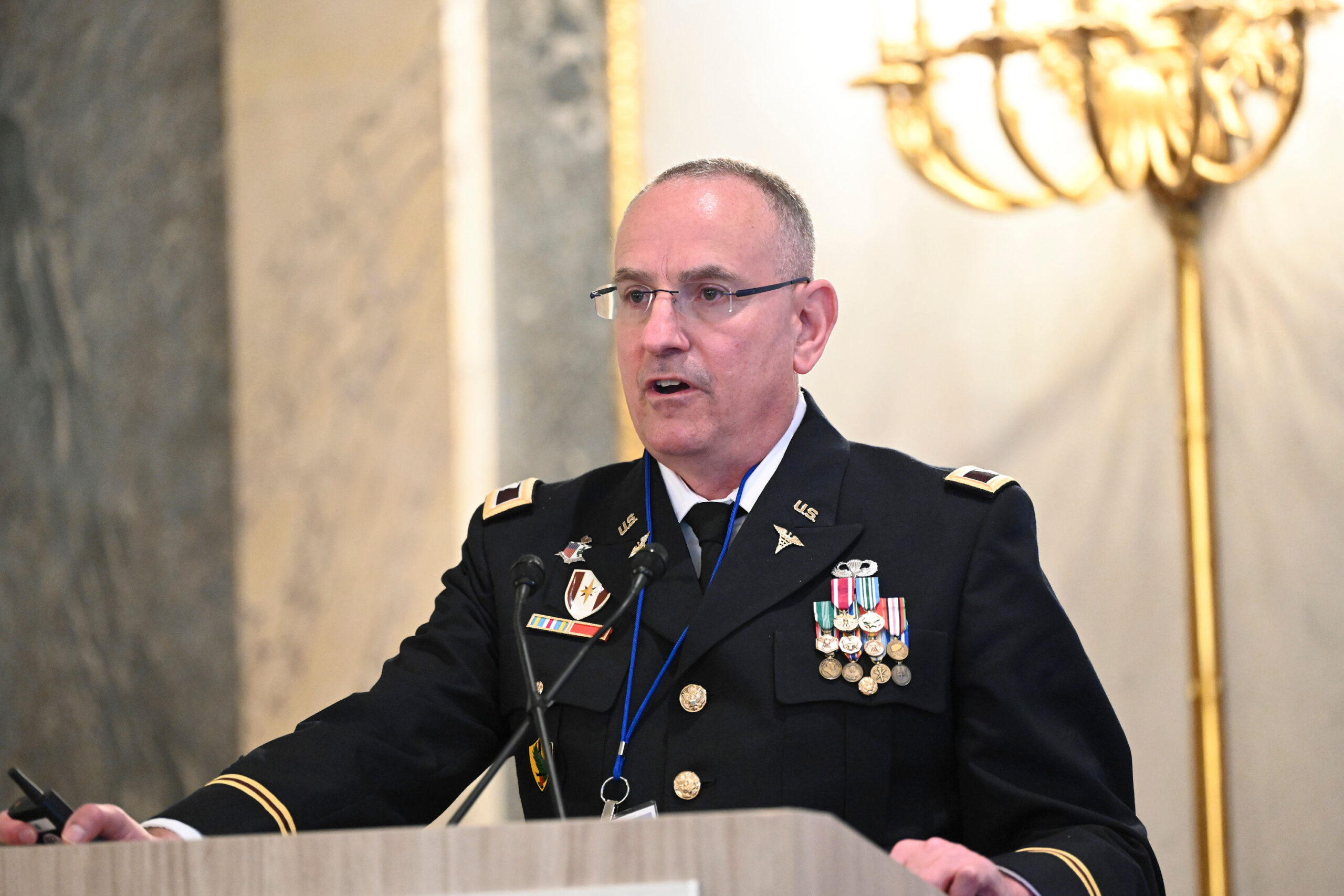
Dr. Martin Schreiber, M.D. is a Colonel in the United States Army Reserve and a trauma surgeon with decades of experience.